By 5:45 on a Saturday, the gravel lot behind the ball fields at Koko Head District Park is already half full. Headlamps bob up the first hundred railroad ties before the sky over Maunalua Bay finishes turning pink. An hour later the same crowd is scattered across Koko Marina Center, catching their breath over garlic shrimp plates and iced coffee, watching boats idle past the docks. This is Hawaii Kai on a weekend morning: no reservation, no parking fee, no permit, just a stair climb that empties into a shopping center, repeated by residents for decades.
What's easy to miss if you've done this hike a hundred times is how many people and organizations help keep both parts of the ritual going. The stairs' upkeep includes work by a volunteer nonprofit with no paid staff. The marina beneath it runs on dues paid by a private boat owners' association and leases held by family businesses that have outlasted three generations of ownership. The weekend routine in Hawaii Kai continues through the ongoing work of residents and local organizations.
The stairs and their restoration
The Koko Head Stairs, officially the Koko Crater Railway Trail, are the leftover railroad ties from a U.S. Army tramway built during World War II to haul supplies up to a radar station at the summit. The military handed the site to the City and County of Honolulu in 1966, and hikers have been climbing the abandoned tracks ever since. Depending on who's counting, the trail runs somewhere between 1,048 and about 1,055 ties over roughly 0.8 miles one way, gaining close to 1,000 feet to a summit that sits about 1,208 feet above sea level.
By the late 2010s, decades of erosion and foot traffic had left the stairs badly worn. In 2018, a group of hikers who'd watched the trail fall apart formed Kokonut Koalition, a 501(c)(3) nonprofit built to fix it themselves. They partnered with the City and County in 2021 for emergency repairs, and over the following ten months the group organized what it calls the largest public works program in the history of the state, somewhere between 1,000 and 1,500 volunteers logging more than 6,000 hours hauling gravel bags and rail ties up the mountain by hand.
That organization still runs entirely on volunteers with no paid staff, funded through donations rather than a city line item. Trail Day announcements go out on Facebook and Instagram, and the group asks people to check in ahead of time so it knows how many hands to expect. The payoff shows up in the numbers people track: since the 2021 restoration, air rescues from the trail have reportedly been cut in half. In July 2023, Honolulu's Department of Parks and Recreation did step in to replace the old WWII structure at the summit with a new steel viewing platform, one of the trail's upkeep projects funded through the city budget.
Compare that to Diamond Head, the hike every visitor defaults to. Non-resident hikers there need a paid reservation for parking and entry, and residents are asked to book ahead during peak season too. Koko Head Stairs has none of that structure. Sources differ slightly on official parking lot hours, some list 4 a.m., others 6:30 a.m., but the trail itself has never had a gate or a curfew. It's free and unreserved, and its upkeep includes work by a volunteer nonprofit.
With no gate or reservation system, hikers should stay on marked routes: the main stairs and the bypass trail around the trestle bridge at the midpoint.
Breakfast runs into a seawall project
The reward at the bottom sits inside Koko Marina Center, which has marked its 60th anniversary as a fixture on this stretch of Kalanianaole Highway. The tenant list reads like a record of who stuck around. Cosmopolitan Sun Shop has sold beachwear there since 1975, founded by Kamlesh Sappal and now run by her daughter-in-law Dianna and granddaughter Ria, three generations behind the same counter. Original Roy's, the flagship of Roy Yamaguchi's Hawaii Regional Cuisine, has served Maunalua Bay views from the same dining room for more than 35 years. Heavenly Island Lifestyle just brought back its Local Farm Salad Bar and extended its menu to run all day, and Kona Brewing still pours from its dockside pub on the marina's edge.
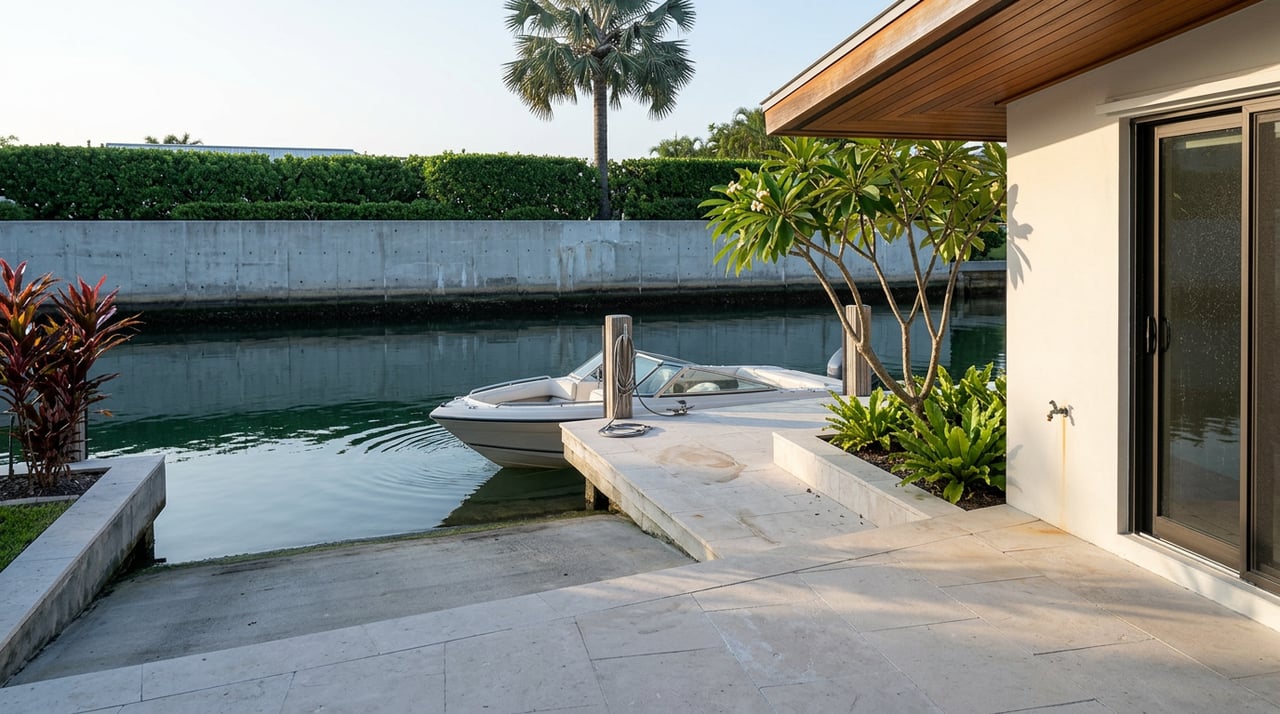
None of that continuity was underwritten by one company or agency. It's a patchwork of independent leases inside a marina that private residents literally pay to maintain. The Hawaii Kai Marina Community Association, which manages the waterway itself, set 2026 dues at $600 per waterfront household, due each January 1. Those dues, plus cooperation from the shopping centers along the water, are what fund unglamorous but necessary work like seawall repair. This year's project at the Hawaii Kai Shopping Center started construction in January 2026 and was expected to run through July, with the association asking boaters to slow to no-wake speed near the property for the duration. If you were paddling past the marina earlier this year and noticed the water traffic moving more carefully than usual, that's why. By the time you're reading this in August, the work should be finished, another piece of infrastructure supported through the association's budget.
Why this holds together
None of these institutions report to the same authority. The trail answers to a hiking nonprofit. The marina answers to a boat owners' association. The shops answer to whoever keeps renewing a lease at a shopping center pushing six decades old. What ties them together is simpler than an org chart: the people who use them keep showing up to pay for and repair what they use.
That shows up in small ways too. Island Craft Fairs ran a pop-up makers market at Koko Marina Center in February 2026 with local vendors like Wick'd Essentials, GAMAR Jewellery, and Flotsam & Co, plus live sets from performers Brandon Onishi and Ronson. Check the center's own event calendar and you'll find another date already on the books for August 15. None of it is centrally run. It's booked, staffed, and shown up for by the same overlapping set of residents and small businesses that keep the stairs standing and the seawalls from crumbling into the bay.
If you live in Hawaii Kai, you already know this rhythm without needing it explained. If you're newer to it, the part worth knowing is the one under the surface: check Kokonut Koalition's social pages before you assume the next Trail Day is guaranteed, and don't take the shopping center's six decades for granted just because it's always been there. The stairs and the marina both stay open because someone local decided they were worth the upkeep. That's not a permanent arrangement. It's a habit, renewed every weekend by whoever shows up.
If this is the kind of neighborhood detail you want more of, or you're curious what it actually looks like to live where this ritual plays out every Saturday, Mavis Nellas is happy to talk story over coffee. Schedule a free consultation whenever the timing feels right.
This article is general information, not legal, tax or financial advice. Consult a qualified professional about your situation.